3D Printer Bed Adhesion Guide: How to Fix Prints Not Sticking

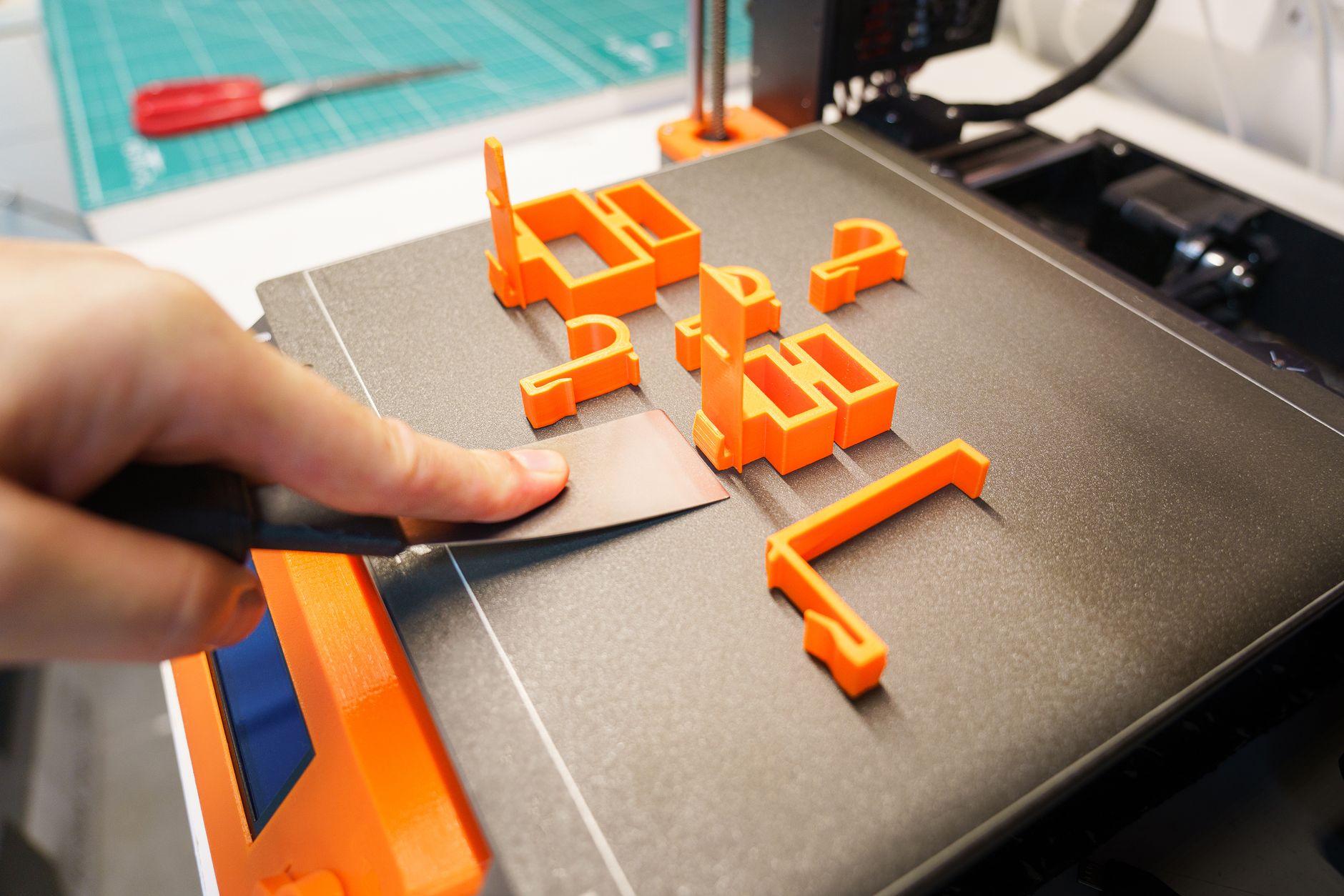
TL;DR: Prints that won’t stick are almost always caused by one of four things: a dirty bed, an incorrect Z-offset (nozzle too far from the bed), wrong bed temperature, or incompatible surface/adhesive. Fix them in this order: clean the bed with isopropyl alcohol (or dish soap), re-level and set the Z-offset so the first layer is squished but not scraped, raise the bed temp 5°C, and if it still won’t stick, add glue stick, hairspray, or a PEI sheet. Inexpensive fixes resolve 90% of adhesion failures. ...

August 8, 2026 · 9 min · Jarrod Gravison

3D Printing Post-Processing Guide: Sanding, Priming, Painting, and Smoothing for Professional Finishes

TL;DR: The fastest route to a professional-looking FDM print is sanding (120 → 220 → 400 → 600 grit), one or two coats of filler primer, a light re-sand to 600–800, then 2–3 thin coats of paint. If you want zero layer lines, use epoxy or UV resin coating for the smoothest finish, or vapor smoothing for ABS/ASA. Resin prints have fewer layer lines but need washing + curing + sanding instead. Budget for sanding time — it’s 60–70% of the whole post-processing job. ...

August 8, 2026 · 11 min · Jarrod Gravison

Where to Find Free 3D Models: Top Sites for STL Files in 2026

TL;DR: The four best free 3D model sites in 2026 are Printables (best overall community + quality filter), Thingiverse (largest catalog, but bloated with clutter), MakerWorld (fast-growing, clean, Bambu-optimized), and Thangs (a search engine that indexes many sites at once — great for finding anything). For curated, tested models, Printables and MakerWorld win on quality and tag organization. Always check the license before spinning up expensive filament. Quick Answer: Where Should You Download STL Files? Not all model sites are created equal. Your choice depends on whether you want the biggest catalog, the best community curation, or the easiest searching: ...

August 8, 2026 · 8 min · Jarrod Gravison

3D Printing vs Injection Molding: Full Cost & Production Analysis

TL;DR: 3D printing wins for one-offs, prototypes, customization, and production runs up to roughly 50–1,000 units, depending on part size and complexity. Injection molding wins for mass production — the break-even point is usually in the hundreds-to-thousands of units, after which molding’s near-zero per-part cost dominates. Printing is a flexible low-volume tool; molding is a capital investment for scale. Quick Answer: When Does Printing Beat Molding? The decisive factors are volume, unit cost, and tooling investment: ...

August 5, 2026 · 9 min · Jarrod Gravison

3D Printer Maintenance: The Complete Preventive Care Guide

TL;DR: Preventive 3D printer maintenance takes 20 minutes a month and prevents 80% of print failures. Do these on schedule: clean/level the bed, check belt tension, clean the nozzle, lubricate rails, tighten loose screws, keep firmware updated, and dry/replace worn consumables (nozzles, PTFE tubes, PEI sheets). Quick Answer: What Maintenance Does a 3D Printer Need? A simple schedule keeps most machines printing for years: Frequency Task Every print Clean bed, check first layer, make sure no debris/oozing filament Weekly Wipe Z rods/rails, check for loose screws, empty/clean debris Monthly Check belt tension, clean nozzle + hotend, inspect bed level (re-run auto level), lubricate motion Quarterly Replace/rotate nozzle if brass, replace PTFE tube if signs of wear, deep-clean, check firmware update As needed Replace PEI sheet, replace thermistor/fan, tighten gantry, recalibrate The exact cadence depends on print hours — a busy print farm does weekly deep-cleans; a hobbyist can stretch monthly. Track print hours (most firmware does) for accurate intervals. ...

August 5, 2026 · 9 min · Jarrod Gravison

How to 3D Print Miniatures: Complete Tabletop Guide (2026)

TL;DR: For quality miniatures, print in resin (SLA) — it captures detail filament can’t. Use a 4K/8K/12K resin printer like the Elegoo Saturn 4, a standard gray/8K resin, tune layer height to ~0.03–0.05mm, rely on automatic supports with light manual touch-ups, then wash, cure, and cleanly remove supports. This guide covers the whole workflow. Quick Answer: How Do You Print Good Miniatures? The workflow in 5 steps: Get a resin printer (detail is the whole point) — see best resin printers. Slice with proper settings: 0.03–0.05mm layer height, ~2s layer exposure (tune to your resin), 3–4s bottom exposure. Orient the model and add supports (automatic “light” support type works well). Print, then wash in IPA (or wash station) — carefully remove supports while the part is still soft-ish, then cure under UV. Post-process: sand nubs, prime with a miniature primer, and paint. For D&D/Warhammer-scale (28–32mm), resin beats FDM every time on detail. See resin vs FDM for details. ...

August 5, 2026 · 9 min · Jarrod Gravison

13 Profitable 3D Printing Business Ideas for 2026

TL;DR: The most profitable 3D printing niches in 2026 are custom tabletop/board game upgrades, cosplay & props, functional replacement parts, jewelry casting models, resin miniatures, and small-batch print-on-demand products. The key isn’t the printer — it’s finding an audience and a niche with pricing power, not fighting over generic trinkets. Quick Answer: What 3D Printing Business Works in 2026? Avoid the low-margin trap of selling generic toys and keychains. The money is in specific audiences who value customization and function: ...

August 5, 2026 · 9 min · Jarrod Gravison

How to Start 3D Printing: The Complete Beginner Guide (2026)

TL;DR: To start 3D printing: (1) buy an easy modern printer with auto leveling like the Bambu Lab A1 Mini or Elegoo Neptune 4 Pro, (2) assemble it per the manual, (3) load PLA filament, (4) slice a model with a free slicer, (5) run your first print from a known-good preset, then (6) learn calibration. Total budget: $300–500 including printer, filament, and tools. Quick Answer: What Do I Need to Start? A realistic starter shopping list: ...

August 5, 2026 · 9 min · Jarrod Gravison

Best 3D Printer for Beginners in 2026: 6 That Just Work

TL;DR: The best 3D printer for beginners in 2026 is the Bambu Lab A1 Mini — it’s the easiest, most reliable machine you can buy, with auto leveling, Wi-Fi, and a very high first-print success rate out of the box. Prefer open source or a lower price? The Prusa MK4S and Creality Ender-3 V3 SE are strong alternatives. Quick Answer: Which Printer Should a Beginner Buy? Beginner-suitability is about fewer variables and fewer assembly steps, not just price. The machines that “just work” skip the manual leveling, fiddly firmware, and flimsy build quality that cause most first-print failures (and first-disappointments). Here are our picks: ...

August 5, 2026 · 9 min · Jarrod Gravison